
A friend who had recently moved to Japan, whose child was just starting elementary school, asked me a very reasonable question. Schools encourage children to make their own way to and from school, but phones are prohibited in principle. How do parents contact them afterwards? Can a parent collect them? What if they get lost?
For families used to children’s smartwatches, phone tracking and adult pickups, that can feel like a contradiction. Elementary schools encourage growing independence while also keeping full-featured smartphones out of young children’s everyday school life.
Look more closely, though, and there are several kinds of support around that journey.
“Prohibited in principle” leaves room to ask
Japan’s education ministry guidance allows schools to consider exceptions on application for needs such as travel safety or a long journey. Permission is not automatic, and the practical rules belong to the school. Ministry guidance, reproduced by Hiroshima Prefecture
Permission to carry a phone and permission to use it are separate questions.
Aoyama Elementary in Minato, for example, discourages bringing phones but asks families who need one to submit an application and agreement, renewed each school year. April 2026 school newsletter
Rather than stopping at the word “prohibited,” explain the situation to the class teacher: a long route, an after-school club, or another journey after dismissal. Ask which devices are allowed, how they must be stored, whether they must be switched off or silent, and when your child may contact you. Bring the model details for a kids’ watch or voice-message GPS too. Public, private and international schools should each be checked directly.
Make the question specific: “Once a week, my child goes straight to an after-school activity. Could they send me an arrival message on this device?” Ask when voice functions may be used, whether permission needs renewing, and how to communicate a last-minute pickup change while your child is at school. A real day’s schedule makes it easier to agree on an arrangement than a general question about phones.
You can build independence a few streets at a time
A child who has just started school or moved to a new country does not need to walk home alone on day one. Agree on accompaniment and collection arrangements with the school, then walk the route together. Notice the crossings, confusing corners and places to ask for help.
At first, you might walk all the way. Later, you might stop at one junction, then let your child walk with nearby classmates. How long that takes can depend on the child.
Driving to the school gate is a separate matter. Minato’s current municipal-school admission guidance specifies walking or public transport and prohibits cycling to school and car drop-offs. That is a local rule, not a statement about every school in Japan; discuss special circumstances with the school first. Minato admission guidance
A small GPS device can answer a smaller question
Sometimes what a parent needs is simply to know roughly where their child is. Dedicated children’s GPS devices can sit in a school bag while a parent checks location on a phone. Depending on the product, they may provide arrival or departure alerts, a check-in button or recorded voice messages.
These are different from item-finding tags. Apple describes AirTag as a tool for finding belongings, not tracking people. Apple’s explanation
Picture a child arriving at the pickup point before their parent. If you simply need to know they have arrived, location tracking may meet the main need. If you want to exchange “I’m here” and “I’m running a little late,” recorded messages may help. If the exit has changed and you need to clarify the meeting place immediately, that is closer to the job of a live call.
These are three different needs, even when products offer several of them together. Sending a voice message does not mean connecting a call, and seeing a device on a map does not tell you what your child is thinking or experiencing. Start with the situations your family is likely to encounter, then choose within the school’s rules.
Two current examples illustrate how the category has developed: the 2026 sixth-generation BoT Talk supports recorded messages, while Mitene Mimamori GPS Talk Plus MB06 adds an integrated alarm and display. BoT messages are exchanged at roughly one-minute intervals, rather than through a live call. BoT Talk · Mitene specifications
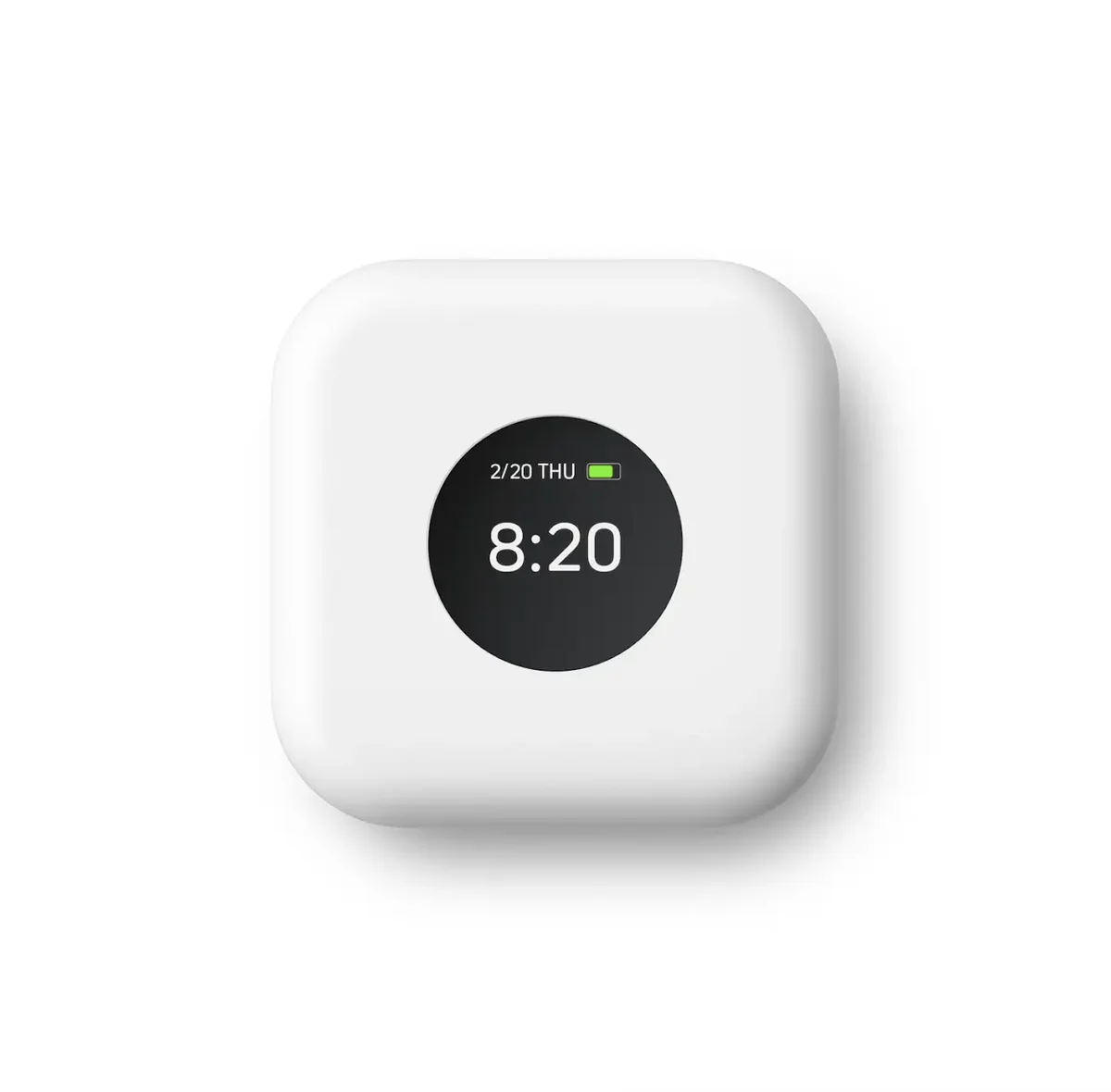
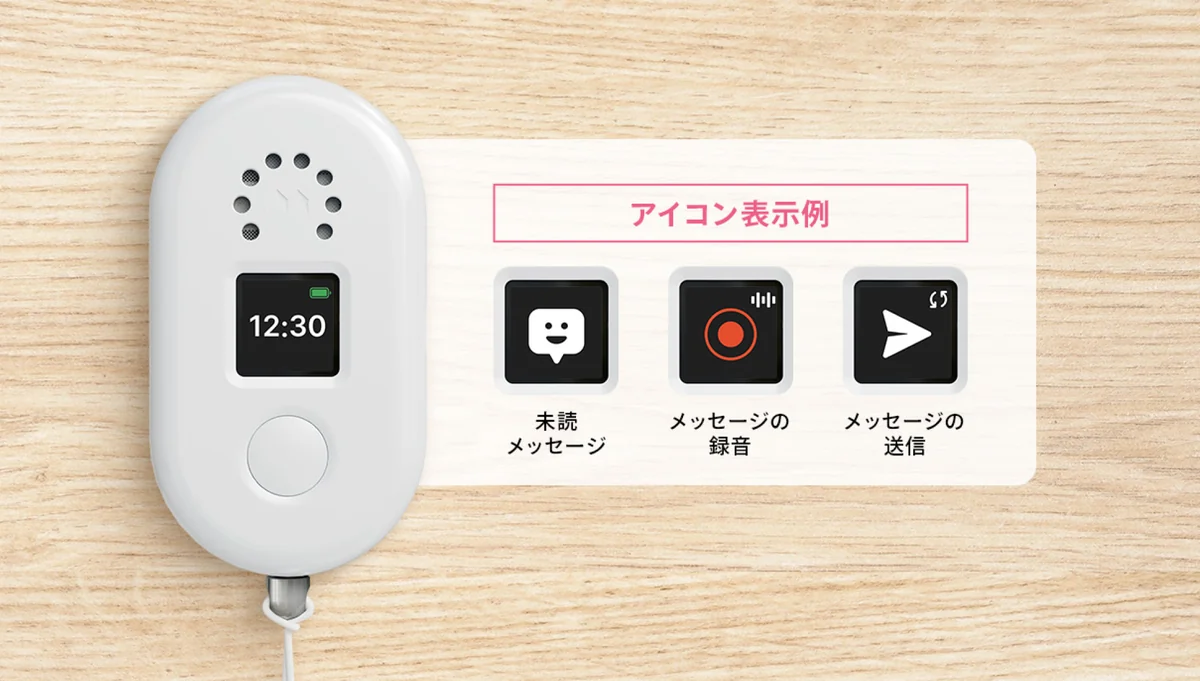
Location reports and alerts can be delayed, so try the device together on the actual route. Try it with the usual school bag, too. Can your child reach the device and stop somewhere safe before using it? Will you notice an alert when your phone is silent or you are in a meeting? A trial outside the living room can reveal the practical gaps.
To me, there is something sensible in starting with the specific need. If it is location or a quick “I’ve arrived,” a device that handles that task may be enough before deciding whether a young child needs a complete smartphone.
In Minato, check the support before buying
Minato began its GPS loan programme in 2025. Municipal elementary-school pupils can apply; the device and child-side monthly communication costs are generally covered. Parents’ own phone data is excluded. Devices must be returned on graduation or transfer, and replacement after loss or certain damage may cost the family. Loan details
The separate purchase subsidy covers eligible grades 1–6 at other schools, including international schools. It is available once per child, up to ¥8,000 in total across eligible hardware, case, charging cable and strap costs. It is not an annual allowance or a balance to claim in instalments. Phones, smartphones, smart tags and communication fees are excluded. Purchase-subsidy details
Both the parent and child must have resident registration in Minato; a school being located there is not enough. The purchase must be from April 2025 onwards, and families already supported through another subsidy or loan scheme cannot receive duplicate support. Eligibility
Keep the receipt or equivalent payment record, photos of the purchased items and evidence of the child’s school and grade. Both schemes remain separate from school permission to carry and use a device, so check that before deciding whether to borrow or buy. Application documents
The little alarm on the school bag has another job
On Tokyo streets, you may notice a small personal alarm, a bōhan buzā, attached to a child’s randoseru. Pulling its switch produces a loud sound to attract attention and help the child seek assistance.
Some municipalities provide them. Shibuya’s 2026 residents’ guide lists distribution for elementary- and junior-high-age pupils living in the ward. Shibuya residents’ guide
An ordinary alarm sounding does not automatically notify a parent’s phone. Remote notification is a separate feature to check on connected models. School closures and other urgent school notices also need their own parent-contact setup.
Seen this way, the tasks become clearer: GPS helps with location, an alarm calls for help nearby, and the school’s communication system delivers school notices. They can work together. Your child still needs to know where to find a trusted adult if a battery dies or a message goes unanswered.
Agree what happens when the device is silent
If the dot on the map stops moving, check the last update time before treating it as a current location. The device may still be in a bag that your child has put down, or the information may not have refreshed. Check that day’s dismissal, club and pickup arrangements, and decide which adult contacts the school or caregiver rather than having everyone watch the same map.
For your child, keep the plan simple and practise it on the route. Choose a safe waiting place if the pickup adult is absent, and identify school or station staff they can ask for help if they take a wrong turn. Stop somewhere safe before operating the device instead of looking down while walking. An emergency contact card and a short, practised request for help can be useful, especially when your child is learning the local language.
Build charging and checking the bag into a daily routine, and rehearse what to do if a battery dies or nobody replies. Adults should know who checks messages and who can collect the child. If there are concrete signs of danger, seek help immediately rather than waiting for a location update. Explain to your child who sees their location and when, so the arrangement is understood on both sides.
Older children still need to check the rules
Secondary-school arrangements may differ, but freedom does not automatically increase with every year group. The ministry guidance allows conditional arrangements at junior high; high-school rules often focus on use at school. Ministry guidance
Hosei University High School, for instance, permits pupils to bring phones but prohibits using them on campus. School Q&A
A move to a new school is a good time to ask again about storage, use and emergency contact. Permission from the old school does not transfer with the child.
Independence still needs adults around it
Independent school travel should involve more than opening the front door and leaving a child to manage every risk. School route arrangements, community support, parents, suitable devices and adults who can respond all have different parts to play. Find out what is actually available along your child’s route.
None of this guarantees greater safety than a phone, or requires every family to let go at the same speed. If your child is still learning the neighbourhood, there is time to walk together a little longer.
Perhaps, at first, you go all the way to the gate. Then only to the junction. Eventually, you stand at the front door and watch your child head off with friends.
That short distance between home and school holds a lot of learning: gradually finding the confidence to walk it for yourself.