On this page
Make room for the pleasure of reading. From sharing a picture book to enjoying a novel independently, find a book your child will want to return to tomorrow.
We want children to read more—not only to learn English or prepare for exams, but to enjoy stories and discover things that interest them. An English book can be a small everyday pleasure: a bedtime story that makes you both laugh, a chapter your child cannot put down on the train, or the first book they choose to open without being asked. This guide is here to help you find those books and make reading part of everyday life.
Here are 12 English-language books for ages 3–5, 6–8, 9–12 and 13–17. Whether your child already learns in English or is just beginning to explore it, start with their interests and current reading level. There is no need to buy the whole list. Start with one book your child wants to return to tomorrow.
Books offer sustained stories and expressions that may not come up in everyday classroom conversation. Following a character lets children meet words again in meaningful contexts and consider how one choice changes what happens next. A story they can follow and want to talk about gives English another purpose in their own lives.
Choose a way to read before choosing an age band
Age can help you find appealing subjects, but it does not tell you a child's English reading level. A confident English speaker may still find a long novel demanding. A child new to English may already be an accomplished reader in another language. EAL, or English as an Additional Language, covers many different learning histories and levels of proficiency. Try a few pages together: can your child broadly follow what is happening, and do they want to know what comes next? The Bell Foundation explains this range of EAL experience.
It helps to choose two kinds of books: something your child can read independently, and something to enjoy with an adult reading aloud, by taking turns or with audio. Understanding a story when listening and reading the words independently are different skills. Shared reading need not end when children learn to read. They can browse across age bands, reread favourites and put a book aside. Oxford Owl's book-selection guidance also puts interests and current reading ability first.
Understanding Oxford reading levels
Oxford Reading Tree (ORT) books may carry an Oxford Level, while Read with Oxford uses Stages. The same number does not mean the same reading difficulty. Oxford Owl's official comparison helps families distinguish the two labels.

The diagram covers the range associated with Read with Oxford Stages 1–6; Oxford Levels continue through 13–20. Books at the same level can still differ in subject, length and how you choose to read them, so try a few pages together. Oxford Reading Tree and Oxford Bookworms, introduced below, are different series. A Bookworms exam-reference chart is not an ORT level chart, and ORT levels cannot be directly converted into Eiken grades or a child's total vocabulary.
Finding a starting point with graded readers
If an unadapted novel feels too demanding, graded readers such as Oxford Bookworms or Penguin Readers can offer another starting point. The chart uses CEFR, the Common European Framework of Reference for Languages, to bring publisher labels and Eiken reference points together and help narrow the choice.

The numbers after each Stage or Level are controlled vocabulary counts, known as headwords. They are not the total number of words your child knows or a vocabulary list to memorise for an exam. Publishers control vocabulary in different ways, so the numbers alone do not let you compare difficulty across series.
Read across a row as a broad reference, not an equation. Some readers span two CEFR bands, while exams also assess listening, speaking and writing. The Eiken column refers to the area around each grade's passing standard. The CEFR level actually reported depends on the four-skill CSE result and the reporting range for the grade taken; see Eiken's CSE guidance. Eiken Grades 4 and 5 do not report CEFR levels. Finishing a reader at one level does not mean a child will pass the exam on that row.
The chart displays A1–B2; Bookworms Stage 6 extends into C1. This Penguin Readers series is intended for readers aged 12 and over. A low language level does not guarantee a subject suitable for younger children, so check the content and specific edition too. Once you have a rough starting level, following the story and wanting to continue still matter more than a position in a chart.
Ages 3 to 5 Make stories something to play with together
Think shared reading rather than independent reading at this age. Looking, pointing and making sounds all count as joining in. Children need not sit through every page, and there is no need for a vocabulary quiz afterwards.

The Very Hungry Caterpillar — Eric Carle Food, days of the week and a caterpillar's transformation carry this short story. Start by finding favourite foods, then gradually add English words; once the book is familiar, your child may want to join in with recurring phrases. The edition in the book catalogue is a board book, ready for repeated browsing.

Where’s Spot? — Eric Hill Lift the flaps to look for a puppy: the anticipation is part of the fun. Ask a question and let your child answer by pointing, using facial expressions or speaking a familiar language. It is an inviting place for families new to English to begin.

The Gruffalo — Julia Donaldson A clever mouse makes his way through the woods, giving adults plenty of opportunities for character voices. The rhymes are a pleasure, but not all the vocabulary is beginner-friendly. Listen together and use the pictures to guess what happens next rather than expecting independent reading; preview the creatures if your child finds monsters unsettling.
Ages 6 to 8 Move from joining in to finishing a short story
Some children are building confidence as independent readers; others are still getting to know written English. Let your child choose a page, a character or a short passage to read, and take over the rest. A shorter book is a perfectly good choice when it keeps the story within reach.
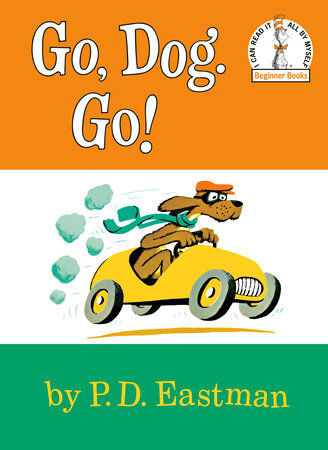
Go, Dog. Go! — P. D. Eastman Busy dogs travel, stop and gather for a party, with pictures that make colours, positions and opposites concrete. Try the short sentences independently or take turns. Children new to English can share a few pages first before deciding whether to continue on their own.
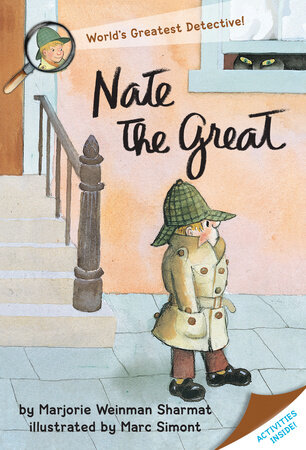
Nate the Great — Marjorie Weinman Sharmat A young detective's search for a missing picture gives readers a reason to turn the page. Look for clues together, or offer it to a child already comfortable with short stories. A simple “What makes you think that?” can open a conversation without turning it into a comprehension test.

Dinosaurs Before Dark — Mary Pope Osborne Jack and Annie's journey into the world of dinosaurs is an option for readers ready to try a chapter book. Share the first chapter to get to know the characters and setting, then decide whether to take turns. This is the original prose Magic Tree House chapter book, not the graphic novel of the same title, so check the edition before buying.
Ages 9 to 12 Leave room for the questions a story raises
These novels suit children beginning to enjoy longer fiction; they are not assignments every nine-year-old should be able to finish. New English readers can stay with shorter books or look for illustrated books about science, sport or games. There is no need to tackle a long novel simply to match an age label.
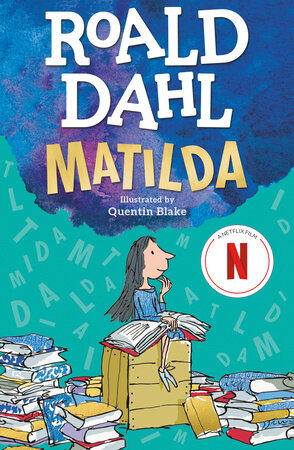
Matilda — Roald Dahl A book-loving girl takes on some outrageous adults in a story full of exaggerated humour. More confident readers can try it independently, or families can share a chapter at a time. Adults mistreat children in the story, leaving room to discuss both what is funny and what feels uncomfortable.
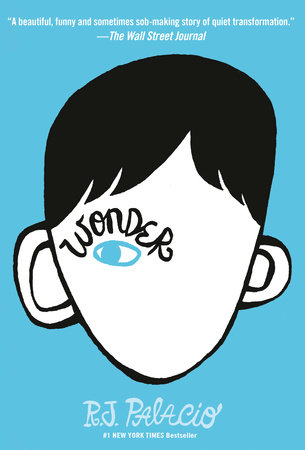
Wonder — R. J. Palacio Auggie's experience of starting school unfolds through several characters' perspectives. Read a chapter and exchange thoughts if your child wants to. The novel includes exclusion and bullying; it need not become a lesson that is supposed to make children kinder, and a conversation can wait until they feel ready.
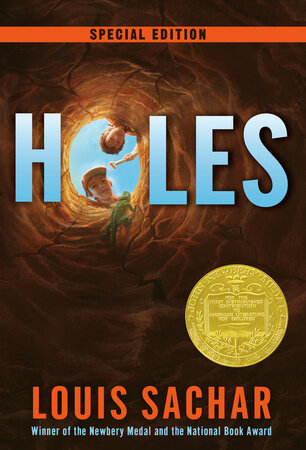
Holes — Louis Sachar Daily digging at a camp gradually connects with events from the past, offering an intriguing puzzle for readers who enjoy mysteries. Following the characters and timelines takes attention; a quick sketch of their connections can help you read together. The publisher lists it for ages 10 and up, and its injustice and violence make emotional readiness worth considering alongside reading confidence.
Ages 13 to 17 Give young people more say in the choice
This is a broad age range, with equally varied interests, English skills and comfort with mature themes. Ask whether your teenager feels like a school story, fantasy or a mystery before handing over a “must-read classic”. Older English beginners can choose graded readers, graphic novels or illustrated nonfiction that respect their interests rather than being sent back to the preschool shelf. A teacher or librarian can help find a good fit.
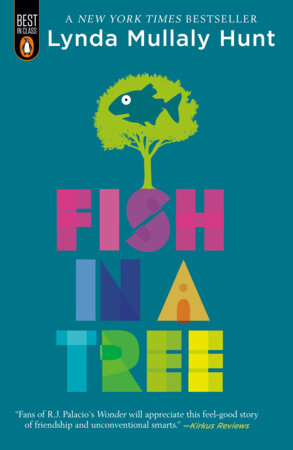
Fish in a Tree — Lynda Mullaly Hunt Ally tries to hide her difficulty with reading in this school story about dyslexia and being understood. Although written for younger readers, it can also provide a bridge into longer English fiction for teenagers who enjoy school stories; it is not a course for absolute beginners. Read independently and talk about the characters, or share it with an adult.

The Hobbit — J. R. R. Tolkien Bilbo's adventure is a choice for fantasy fans already comfortable spending time with a novel. Longer sentences, an older storytelling style and unfamiliar names can slow the pace. Take a chapter slowly or listen to audio while following the text; there is no need to keep up with someone else's page count. The adventure also includes peril and battles.

A Good Girl’s Guide to Murder — Holly Jackson Interviews, records and shifting clues give more mature mystery readers plenty to investigate. The US publisher lists it for ages 14 and up, and the story includes murder, sexual violence, drugs, suicide and self-harm. Preview the content and decide together whether it is a suitable choice; it is not a blanket recommendation for every 13-year-old. While reading, compare what the evidence establishes with what you suspect.
Make a little reading time worth looking forward to
Try making 15–20 minutes a day a small family goal, without watching the clock too closely. You can split it into two shorter sessions; it is not a universal minimum every child must reach. After dinner or before bed, let your child choose a book, read for a while and chat about whatever catches their attention. On busy or tiring days, a few happy pages are welcome too. If school sets a reading routine, take that into account alongside how your child is feeling. BookTrust's advice on reading together puts flexibility and enjoyment at the centre.

When your child needs more support, read aloud while they look at the pictures and join in. Picture books and stories with repeated phrases work well; for phonics practice, choose decodable books matched to the patterns already taught. If short sentences are manageable but longer passages interrupt the flow, take turns reading a page or a paragraph and let an adult handle the tricky parts. When your child can read comfortably, let them read independently and have a brief chat afterwards. These are not steps that can only move forwards: confident independent readers can still share more demanding books, or simply a story they love.
Keep books within reach, and put your own phone down to read for a while too. You need not correct every pronunciation or ask for a written response every evening. Sometimes you can stop at an intriguing moment and pick it up tomorrow. Keep telling stories and talking in Japanese, Chinese, Korean or your other family languages alongside English. Use the language that lets a good conversation happen. Reading Rockets explains the value of continuing home-language literacy.
If novels do not appeal, try something else. A dinosaur guide, a player's biography, a recipe book or a gaming guide can all invite serious reading. Asking what your child wants to find out may be more useful than asking what level they have reached. School-directed phonics or word-reading practice can have its own place; leave room for interests to shape family reading too.
Buy a few books your child will want to read again
Owning a few self-chosen English books lets children reread, make notes and take them out and about. You need not buy a whole series at once, or buy everything new. Libraries and second-hand books in suitable condition are good options too. Sample the text, then check the language, ISBN and edition, particularly when a title comes as a prose book, graphic novel or adaptation.
Browse Kodomo Reads by age, difficulty or theme. You might start with one book for independent reading and one to share. Some purchase links on the page are Amazon affiliate links. As an Amazon Associate, Kodomo Go! earns from qualifying purchases. Check the retailer's page for the current price, availability and edition.
Questions parents often ask
Does a child in an English-medium school still need easier books They can certainly enjoy them. Familiar stories leave more attention for pleasure, and an easy read does not mean a child is going backwards. A more demanding new book can be one to share.
Can I read with my child if my English or accent is not native-like Yes. Looking at pictures, talking about characters and chatting in the language you feel most comfortable with are valuable ways to share a book. Use a legitimate audio edition when helpful; you do not need to become a professional narrator first.
Does reading in English mean choosing only unabridged classics No. An English-language edition is not necessarily unabridged, and a well-chosen adaptation has its place. The editions of A Little Princess, Black Beauty and Treasure Island currently in the Books catalogue are easy-reading adaptations, not the full original texts. Choose the version that suits your child's needs now.
What if my child rereads the same book or gives up halfway through Rereading and changing books are both fine. Invite them to try another subject, or share a few pages together. Finishing a book does not have to be the goal of every reading session.
Help a well-loved book find a possible next chapter
Do you have English children's books in good condition that you would like to see read again? Kodomo Go! is considering possibilities for reusing and sharing books. Please contact us first with a rough list of titles, the readers they might suit and your area. We will use the interest we hear about to explore suitable ways to share. We are not currently accepting books or offering a trading service, so please do not send books directly.